

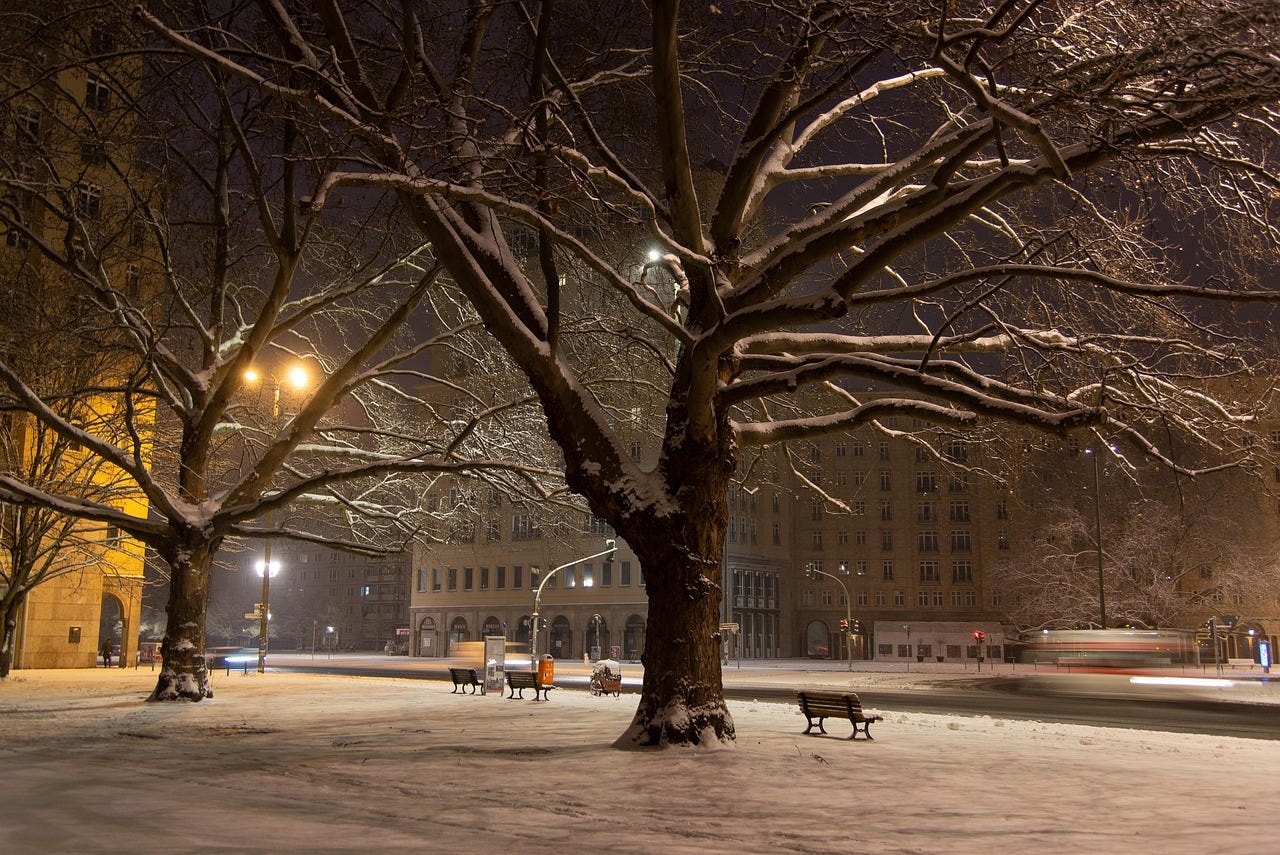
The news cycle seems dominated by two very different forms of ice at the moment, like a dose of providential wit.
When a large snowstorm (or any natural disaster) looms, it becomes clear to all, as individuals, how helpless and small we are. The grocery stores quickly empty, camping supplies disappear from shelves for miles, and then we all simply hope and wait. Most of the predictions are quickly invalidated, because despite our advancements, such a disruptive part of our lives is still largely an enigma at which we can only make educated guesses.
As people burrow in their homes, waiting for the storm to strike or miss them entirely, we are most connected with prior generations. Sure, we can stock up at grocery stores beforehand, but thereafter, it’s just about hope. We are powerless against the weather. There’s a surrender inherent in the process, in which each household yields to the reality that it has prepared as much as it can.
Transportation stops, power is lost or at least feared to be unreliable, and there we might see our similarities to the man of yesteryear, who we are too quick to dismiss as lesser for his technological inferiority. In a moment just as helpless, we stand beside him.
Contemporary culture is so eager to separate us from him that it invents a “modern man” who supposedly needs different things. It is at least implicitly asserted that he must have a different essence that requires new architecture, music, and liturgy. This “modern man” is a largely unknown and little understood beast, except that he can only be fed or entertained by that which is novel. The things of the past, that time of mediocrity (on this account), cannot possibly uplift the new man.
But it’s a lie. This falsehood causes us to fail to see what has been handed on to us by past generations, to understand the debt that we have to our posterity, and to be connected with other generations by our common destination. It is in that natural connectedness that we might be better prepared for storms of all varieties, and weather them with virtue. Simply by being aware of similar battles overcome by others throughout history, we are bolstered in our own resolve. When we are isolated by the posited notion of uniqueness in struggle and in nature, we are made unnecessarily vulnerable.
What fed and sustained the souls of past generations can nourish ours today, if only we stop pretending that technological advancement is akin to interior growth; a civilization without virtue scarcely deserves the name. Our access to technology does not make us morally superior, and we are not interiorly nourished in ways disparate from those of history. Knowing that, we ought to seek out and protect the art and liturgy that sustained the men of antiquity, for our souls are not so different.
After the storm ceases and the snow on the ground shines its reflective light, there’s a kind of unmatched peace that can only exist at the end of a fulfilled hope. That’s what our forebears felt too.
Another lie we tell ourselves is that progress is always making things better. Better than when? Yesterday of course. But if we really step back and look at what so-called progress has given us is it has damaged our minds, bodies and souls while giving us more of everything that is meaningless and that we can't take with us when we die.
Glory be.