

We are seeing an increase in high-profile cases wherein the rightful focus is migrated from the act that a criminal committed onto any extenuating circumstances that can lead to a plausible diagnosis. In other words, we seek to pathologize evil. It is easier for us to declare people sick than it is to acknowledge the malevolent capacity of each one of us. If this ideology is accepted, one might be forgiven for asking whether we should we close the prisons and open only hospitals. Criminal rehabilitation is all that we dare utter, punishment being a word no longer spoken.
In our excuse-making for those who have committed violent acts following a troubled early life, we engage in a moral crime against all of those who have experienced similar hardship (including those who did not go on to engage in brutality). If we proclaim that those who have experienced hardship, even extreme tribulation, are not responsible for their crimes thereafter, then we do them the injustice of denying their humanity.
We assert that they must become so defined by the darkness that they experienced that they cease to be meaningfully human. Our ability to reason is a primary delineating factor in what separates us from mere animal. We know right from wrong and we are able to choose it. Some experiences can certainly intensify temptation and make choosing the good harder, but they do not vitiate our autonomy. Those who have harmed us cannot rob us of our humanity or of our will.
Many of the martyrs have taken solace in the fact that even in the most extreme moments, they were still able to take a moment to pray to the one true God. In that most intimate of ways, and in the midst of grotesque persecution, they had their own will and they chose the Good.
The modern assertion of victimhood is being morphed into a proclamation that those who have suffered are no more than their wounds—that they are no more than their abusers believed them to be. Instead, they are reduced to mere pets by the social scientists who offer a type of absolution by dehumanization.
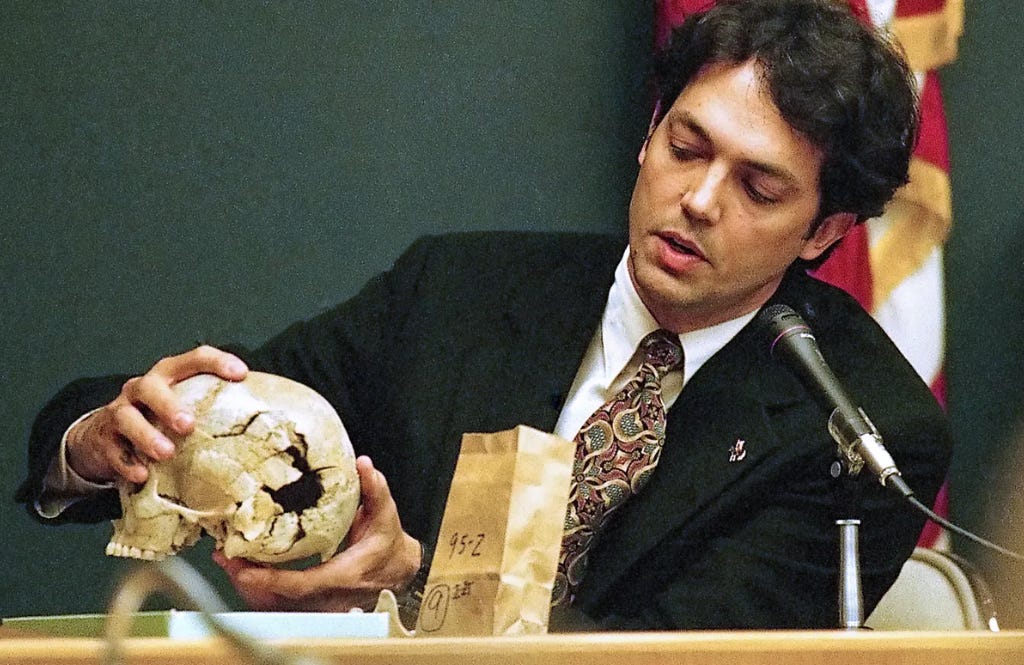
Christa Pike had a long history of childhood sexual abuse and neglect. But then at eighteen years old, she collaborated with two others to torture a fellow classmate to death. Thereafter, she kept a trophy of the murdered student’s skull and took it to school to show off to her friends. She was later sent to death row. The case became high profile in recent weeks as she prepared to face the death penalty, with large swaths arguing that her early history was not adequately taken into account at her sentencing.
Hers was not a split-second decision that was made via a trauma-induced reactivity. This was the slow torture and carving up of a classmate, followed by continued boasting in the aftermath. If we wish to proclaim that Christa Pike was simply affected by her early life to such a degree that her actions are in some way understandable, then we must proclaim that in those acts of abuse that she suffered, she lost her agency. She becomes a mere product of someone else’s decision making, and it is hard to muster a more unchristian ethos.
Fr. Alfred Delp, S.J, who was eventually executed by the Nazis for being a Jesuit and part of the resistance to the regime, wrote rather differently about those who have suffered:
“We need people who are moved by the horrific calamities and emerge from them with the knowledge that those who look to the Lord will be preserved by Him, even if they are hounded from the earth.” —Alfred Delp
There is a dignity in man that cannot be eviscerated by suffering, but is exemplified by those who choose to become lights in the world despite their circumstances. If we do the opposite and thereby implicitly proclaim that those who have suffered are without agency, how else might we typify that? Do we deny victims of horrors the right to vote? Do we deny them the ability to own the weapons that they might need to defend themselves?
While this might seem outlandish (and rightly so), it is the logical conclusion of the argument that is being made. There is no reason why this denial of agency must only exist within the justice system; in fact, that is necessarily unjust. Either people have agency and that should be acknowledged everywhere, or they don’t, and that likewise must be reflected throughout other areas of life.
Our denial of malevolence within the human heart is excused as a type of compassion, but it actually does great harm societally and individually. We must acknowledge acts of evil and be willing to confront them, else we will be rendered incapable of enacting justice. Moreover, via such a broken ideology, we will rob real victims of the dignity that comes with a recognized moral duty. Prior suffering can make the choosing of goodness especially virtuous, because it is harder, but it cannot mitigate our responsibility such that it denies who and what we are. We are called to act as moral agents and therein will we elevate ourselves above those who have induced suffering unjustly and against those who would deny our personhood.
"If we wish to proclaim that Christa Pike was simply affected by her early life to such a degree that her actions are in some way understandable, then we must proclaim that in those acts of abuse that she suffered, she lost her agency."
In an infinite mirror image we then have to trace back every trauma that every one of her abusers had also suffered ad infinitum back to The Garden."
It is un-Christian and ultimately a futile chase always into the past.
As Mary Midgley notes in Wickedness (1984), neither physicians nor psychiatrists ever asked to be burdened with the task of making people morally good. Nor should we expect them to be able to.