

While in Buffalo, New York for a work trip, a friend took me to see the basilica, Our Lady of Victory. It’s breathtaking in its splendor, and a little shocking to the senses to step from an American city and into this piece of medieval Europe. I confess that my eyes watered slightly as I walked throughout:
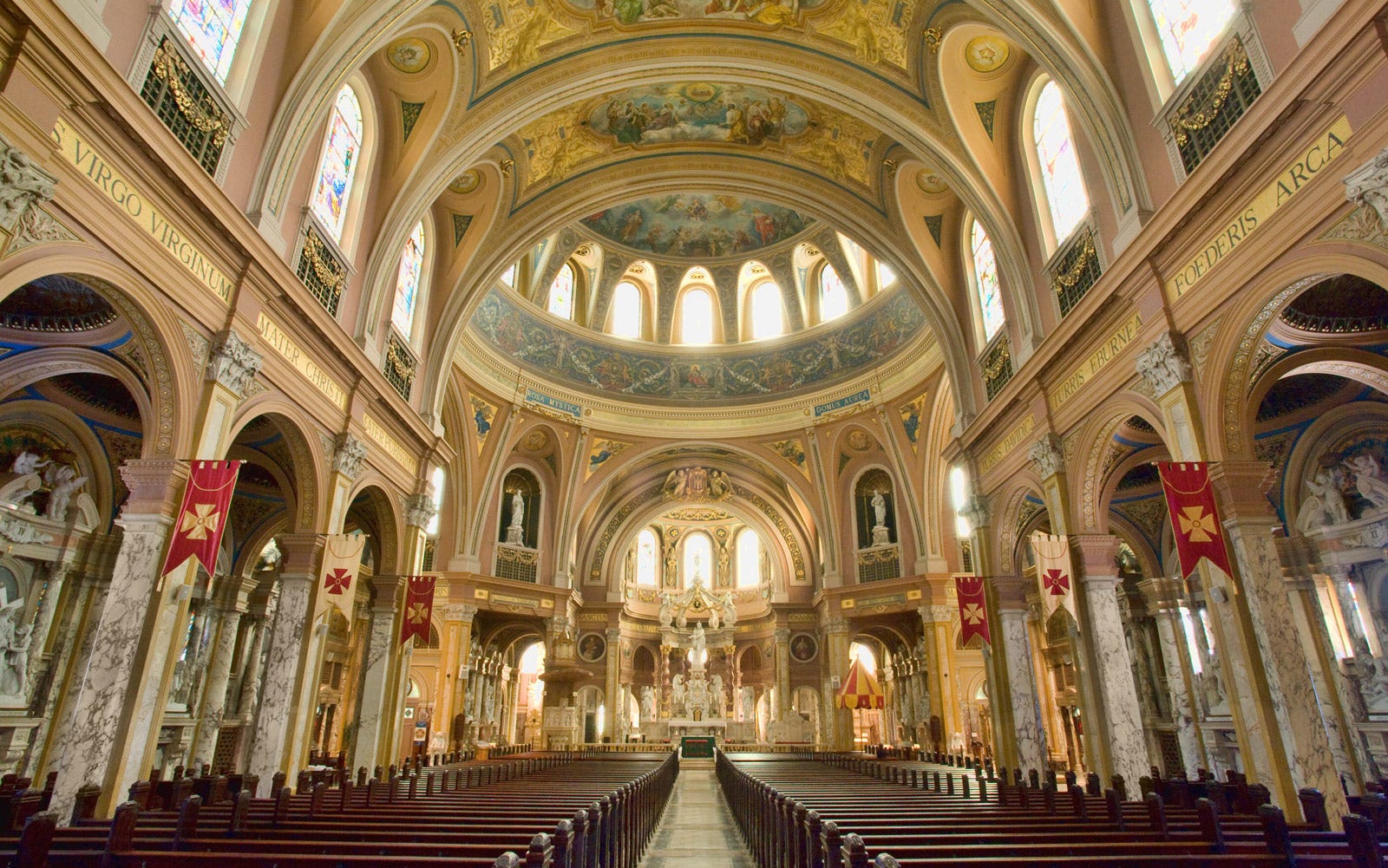
One cannot help but gasp at its majesty. Such churches still do what they always did—they connect us to the Transcendent by reminding us of our own smallness. In a world of brutalist architecture and minimalist decor, there is something healing to the soul about visiting a place that recognizes an objective standard of beauty among men.
“Can’t you worship anywhere?,” the heathens demand. Yes, we could, and we have done so in times of persecution, but we likewise know what is fitting, which is that we give our very best to God. We have worshipped in the catacombs and in the prison camps of the Soviet Union, but we ought to always aim for the highest that we can offer.
When we instead settle for the bland and insipid in our places of worship, the other areas of our culture are not elevated, as if beauty could be redistributed by decree, like a misguided act of aesthetic socialism. Rather, by losing connection with what we are made for, by forgetting the exalted vocation of Man, everything about our lives, businesses, and architecture become lesser. Such beautiful churches used to be the center of great cities as well as remote villages, and even when we live in a perverse culture that rejects the Transcendent, these places can remain centered within us, drawing us out of the mundane and into the sacred.
The man who commissioned Our Lady of Victory basilica to be built, and who gathered the funds for it, is now up for canonization. Msgr. Nelson Baker was declared venerable in 2011. He was known as the “Father of the Poor” for his tireless efforts to build orphanages, a hospital, and a home for unwed mothers. His tomb is now within the basilica that he had built in thanksgiving.
Despite its grandeur, the basilica was built without incurring any debt, relying largely on donations from generous people throughout the country who saw the value in what he was doing, and the holiness of this priest. After seeking the intercession of Mary, he told drillers exactly where to dig for gas, and thereby created a natural gas well that is still producing to this day. That likewise helped to offset operating expenses.
While photos are ill-equipped to convey its beauty, they can give a vague idea of how every detail was made to overwhelm the senses. (There is an online 3D Tour available, though nothing can compete with visiting in-person.)
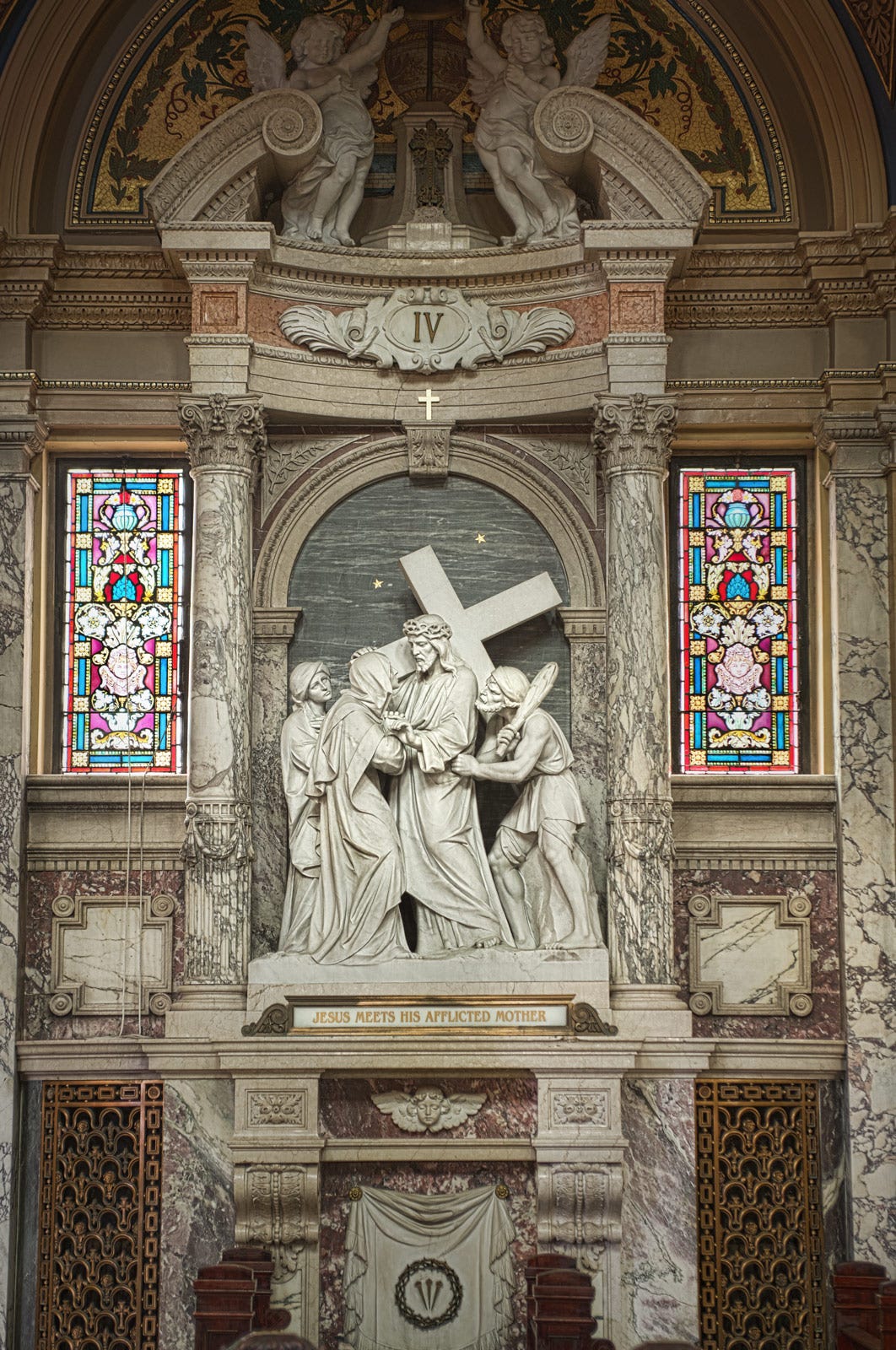
Each of the 14 stations of the cross is depicted by a large sculpture that alone would be the centerpiece of most churches:
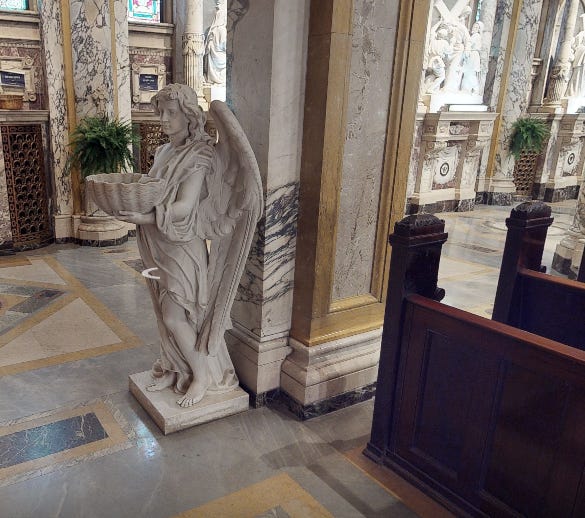
The holy water fonts at the entrance of the church are basins held by full-size angels:
It’s easy in the modern world to forget or surrender what beautiful art is capable of expressing and pointing to. We have lost our collective memory of what it looked like when people acknowledged Christ as reigning King. We have forgotten what such people could accomplish, with God’s blessing, such that it can now seem to be impossible—or worse—unimaginable.
Yet to immerse oneself in true beauty is to remember. It is to step outside of our own time and place to a greater good that transcends both. As individuals and families, we must reach for such experiences, whether in architecture or music or art, that connect us with the sacred. Such beauty is not an ornament to our faith, but its echo: a reminder of the Heaven for which we were made.
Sarah - while I know your photos have a hard time conveying the beauty of this basilica, your words clearly express the beauty of our faith and the importance of creating these sacred spaces. At each Mass we experience the past, present and future of Christ’s sacrificial offering and these magnificent churches are a testament to our commitment to honor His sacrifice.
So lost are we in the empty, soulless, and mundane architecture of the modern world, we would be entirely robbed of what beauty there is in the sacred spaces of another age were it not for cathedrals such as the one you describe in your article.
I think your same reasoning can be applied to the Latin Mass. The value is not in the Latin language per se - it is about the transcendent nature of the mystical experience the Latin Mass offers.
Thank you, Sarah, for an insightful, beautifully written article.