

In the flurry of constant obligations and demands for our attention, we can exhaust ourselves. The frenetic nature of our burnout culture has reached the level of trope. It is typical for us to lament the American work ethic as antithetical to human health, while being almost unconscious contributors to it.
So what of the desire to pause, to break, and to recover? Let’s be adventurous and call it a weekend, as if the work week could have a terminus. Herein lies the actual problem. We no longer know how to be human—how to enjoy or recoup in a way that acknowledges the reality of the human soul. The activities of the weekend are thus filled with other obligations that went neglected throughout the week: the groceries, the laundry, paying bills, etc.
Few working age adults, especially those with families, don’t fantasize about having completely free days, with an empty schedule, an unfilled calendar, and freedom to do nothing. In the fanciful dream, that’s when we could truly recharge, and return energized. Reality is an intrusive beast. Doing nothing at all does not cause us to recharge, but to drain further. It does not heal. In fact, our modern idea of “doing nothing” is to binge watch TV shows or doomscroll through one’s phone mindlessly. Yet somehow, this lack of activity causes a draining of all impetus, a complete lack of drive, and can even impose a temporary depression.
We don’t know how to rest because we are somewhat under-developed. An educational system (and corresponding societal structure) set up solely to create workplace skills has resulted in a people who don’t know who they are when departed from that work. This is also why people turn to social media platforms and begin a different type of production for the collective, in the form of quick messages designed to appear profound, inflammatory, or amusing. It is the commodification of one’s most trivial thoughts.
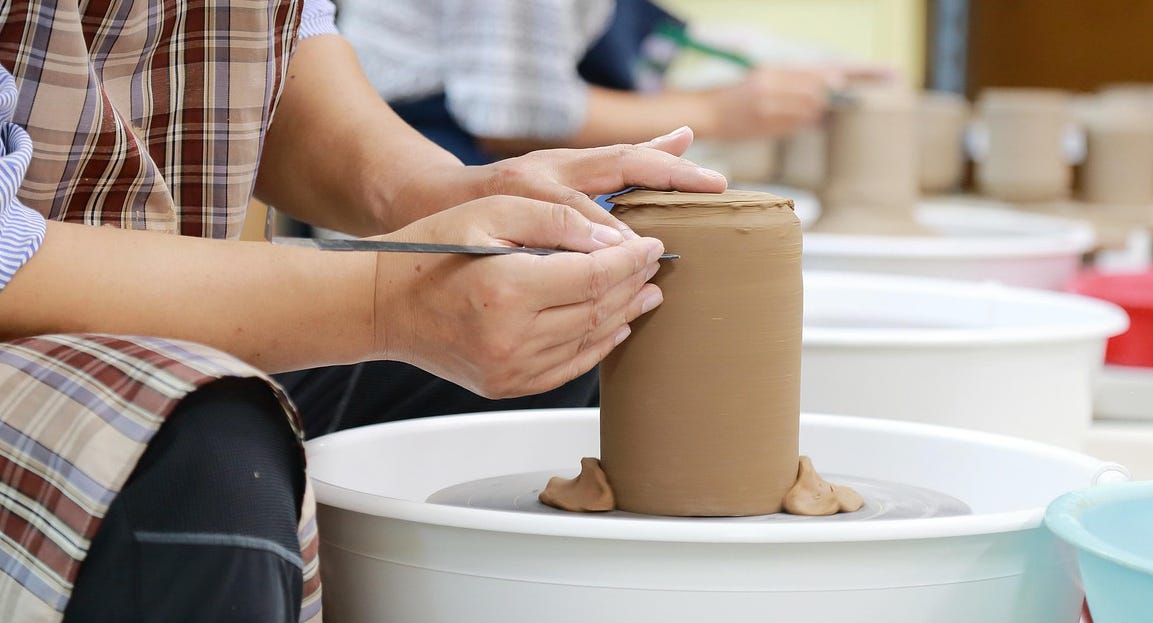
Past adolescence, the vast majority of people do not cultivate hobbies. It’s abnormal to do so. Those who do have them will typically describe them as “side gigs” or as if to remind us of the frenetic battle, “side hustles,” or, “a potential passive income source.” All of these demonstrate an attempt at productivity and revenue building. Do not misunderstand—there is dignity in work, and we should aim to do that well, but it should not define us. It becomes a problem when an entire culture has no sense of what it means to enjoy something.
To be human is to grow, to think, and to play, quite outside of any ulterior motivation. There is no justification needed for that. Yet, we live in an age that feels the need to justify every activity except for the mindless (TV/phone use). “What do you intend to do with that?,” is the contemporary objection, and it’s a dishonest phrase, for what is meant is closer to, “How are you going to turn that into a profit-making skill?”
If we instead thought of ourselves and others as immortal, and recognized that activities in their own right can help us to grow as individuals, we might live our lives differently. This is not a lustful vision of utopia, but a simple reminder of a past we have forgotten. While some people played musical instruments, some would prefer to grow a garden, knit, brew their own beer, draw, or paint. The younger generations have stopped all of that. It is true that modern devices have provided easier distractions, but we must acknowledge that we are worse for it.
We can lament the loss of attention span, but that is a product of our every task being driven toward an explicit, utilitarian end in an environment set up to provide instant results because “time is money.” Being able to enjoy the silence, to concentrate, to be intentional with our time, and to learn a skill all involve growth in virtues. They cause us to evolve as human beings. They make us better in how we are able to engage with others, understand ourselves, and embrace true adulthood, rather than the extended adolescence that has become common.
Most young people immerse themselves in their jobs, then use the internet to burn time in the evenings. They are exhausted and are misinformed on how to recover properly, so their very activities condemn them to continued fatigue. Inebriated social occasions provide the only reprieve from the monotony of lives that are not well-lived.
If we are to restructure our society into one reflective of a healthy order, we must always start with ourselves. If we do not have the attention span for the latter, the former is an impossibility. Since we are living a foundational error that denies what is inherent in man, and what departs him from mere animal, we must learn to pause, to play, and to be social in ways that are beautifully human. If we are to see ourselves as more than the fruits of our labor, then we must first act as if we are worth cultivating. Then and only then can we form what would be meant by a true community—persons who are unique in their interests, growing in virtue, bonded by their loves, all as sons and daughters of one Creator.
Hi Sarah, thank you for your insightful so pertinent observations! In the country where I was born, you met someone first, liked him, got to know him a little, then did business with him. Here in America, you hire someone, you work with them, you get to know them and then you become friends. This is exactly part of what you are describing. We are so immersed in "work" that we can't even conceive of meeting someone or spending time in a human relation unless it is "productive". Again, thank you so much for your continued writings and I am so glad you do. I always read what you write but this time decided to leave you a comment!
I am 85, and the hobbies I began as a child are still making me happy. I don't know what I would do with my time without them. But I would like to mention some other things that existed when I grew up and were strong before computers sucked up our time. I'm talking about community organizations and group events. These still exist but are scarce, although people still meet at churches or bars or political events. Maybe I just have been living in the wrong places, but I haven't lived anywhere in this century where there were plenty of traditional events and activities that people attended year after year and where they formed friendships that lasted. Maybe it's not just that computers and cell phones have replaced all that; I think we also move a lot and in new towns or neighborhoods there may be be no way to meet people. Although writing this comment is a social event, it is unlikely to result in friendships, and my next comments will probably also be made to people I cannot even picture. Although people always had to make new friends when they moved to new places, I think many people may not even bother now and just go online to converse with some new strangers. More and more, the lifelong friendships we might be able to describe may only occur in videos or novels.