

In the wake of the assassination of Charlie Kirk, perhaps one of the most shocking revelations is how mainstream it is for those on the left to cheer for his murder. Online posts celebrating his untimely death have thousands and sometimes tens of thousands of likes and shares. Mainstream publications have released articles justifying his death. We are not simply seeing evidence of an occasional psychopath, but rather, a common ethos.
This is a critical distinction because every society in every age has fringe evil elements, but to have widespread acceptance of evil is a different phenomenon altogether. That means that we have lost the “immune system” of the culture, in which would-be outliers act in moral ways in order to fit in and avoid confrontation. Our society simply has not been assertive enough in its moral stance to create this kind of shield.
Charlie Kirk’s public assassination came as such a shock that most of us are still processing the reality of what happened, and waiting to see how it changes the political landscape, because we already intuit that it has. The cheers in the background by those who have neither shame nor fear of repercussion only add to the sense of unease about the days that may be ahead.
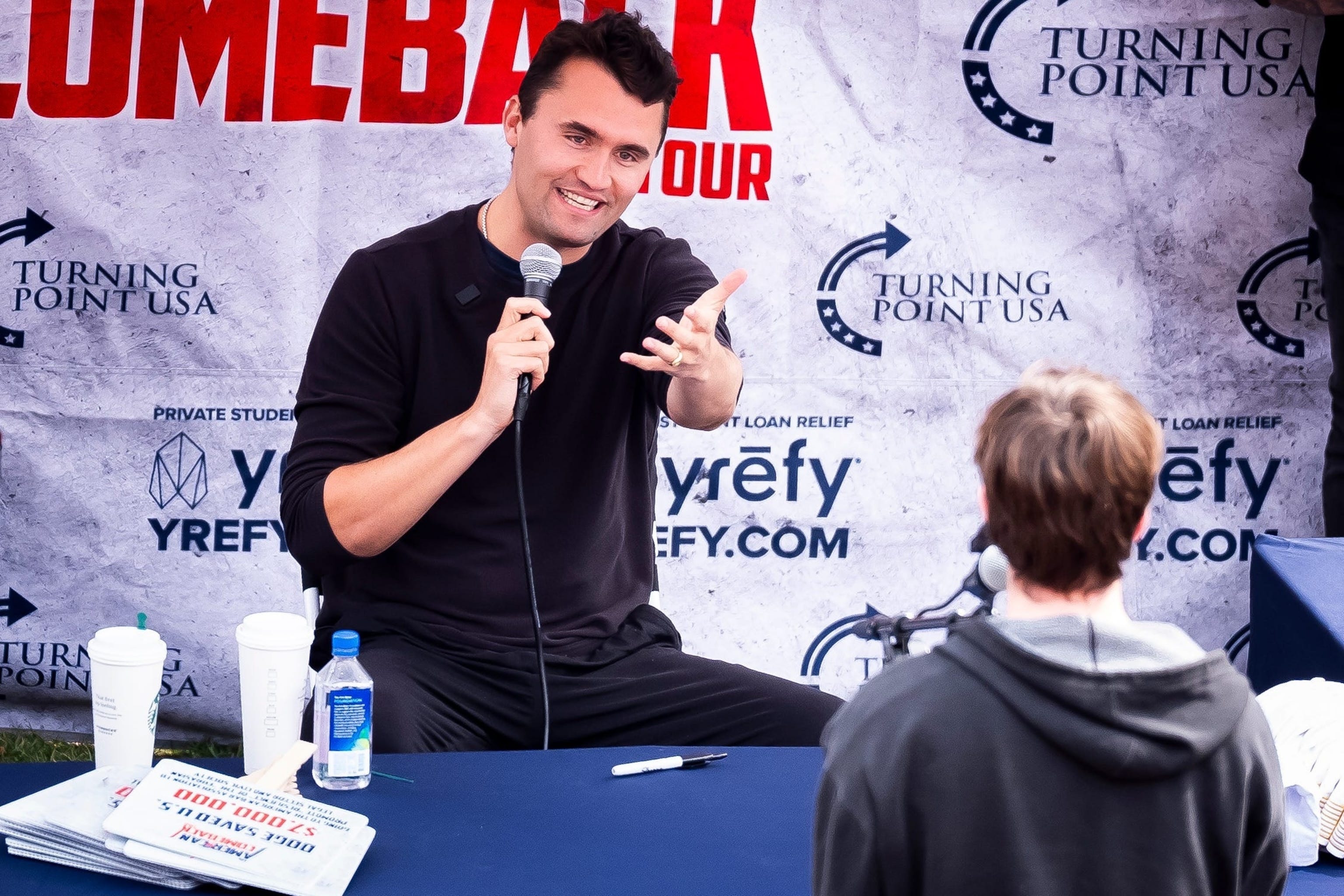
We must further acknowledge that Charlie was a defender of moderate conservatism. He wasn’t on the extreme fringes. He was the jovial guy who wanted to smile, have a calm conversation, and cause young people to rethink what they have been taught. There are plenty of people who scream online and who act sensationalistic for the sake of view counts or fame, but that wasn’t his schtick. There are likewise people who earnestly hold views further outside of the Overton window, and who attempt to express them articulately. That wasn’t Charlie either.
He argued on common, popular topics like strong borders, freedom of speech, and small government. He was staunchly pro-life and a defender of the natural family. It is these “standard” viewpoints that ultimately got him assassinated. These were the normal American values throughout most of American history. Only in the last couple of decades have they hit serious opposition.
As we have seen tragically represented in dozens of videos, Charlie Kirk lived the family life that he encouraged young people to follow. He put his spoken values into practice in his personal life. So, we can watch old footage of his excited daughter running to him on a set, and we can reminisce about him showing his children the murals on a church ceiling. They have become hard to watch. He was a true father, and his children must now live the effects of an unjust and evil privation.
But modern leftists argue against the traditional family unit, claiming it to be an instrument of oppression. They do not see the value in this building block of society. So they are indifferent (at best) to the death of a caring father. Ironically, we now hear that the shooter’s own father was who turned his son in to authorities, which must have been an unbearably painful task.
So much of the mainstream leftist cant is now geared towards monstrous outcomes. Those who equate words with violence will be able to justify attacking those who speak in ways that they disagree with. Those who deny reason over basic biology, family units, and societal cohesion are necessarily going to act against the natural order.
As political violence becomes a normalized part of American life, what commentators have been referring to as the “culture war” will become much more literal. Charlie’s death feels like a dark cloud in part because it means that calm, open dialogue cannot happen anymore without reasonable expectation of violent repercussion. If Charlie couldn’t safely engage in such debates, then nobody can.
Charlie was a man of deep Christian faith, and it was clear that it was a huge motivating factor in why he pursued such a fight. He understood the relationship between proper masculinity and duty, as well as that between Christianity and civilization. As we remember him, may we not forget what mattered most to him. When he was asked just a few months ago how he wanted to be remembered, he said that his courage for his faith was most important:
If we were to build a society on the basis of that faith, then it would uphold the values that Charlie tried to defend. It would protect the innocent, safeguard the family, understand rights in relation to one’s duties, and recognize Christ as King. It’s been done before. It was called Christendom. And we can do it again.
Thank you, Sarah, for your insightful words. I usually rush to read the work you put out, but I was so pained last week by what happened that I felt I couldn't read. It's still difficult to believe what happened. RIP Charlie Kirk.
As always Sarah, thank you for an insightful read; a read profoundly sad and discouraging, yet hopeful and promising tucked within the pages. These young people will find courage and strength in this ugliness. Their faith and trust in Christ will be the propelling push.
There are thousands of young people who looked up to Charlie Kirk. He taught them well with a joyful heart sweet smile and often with a dash of fatherly stern thrown in. Most absorbed his brief teaching with eager anticipation and understanding. He clarified for them when they did not. There were the usual hooligans of course too brainwashed to see the light or to listen. They were the minority. We older adults listened and watched with amazement at such a young man who started at age 17, who knew Scripture verse and number from Genesis to Revelation and everything in between. He was a scholar without the degrees and promptly had no embarrassment admitting it, when youngsters feeling full of themselves right in or out of high school or college
tried shaming him. He did not preach only shared with those who may not have ever heard, or for others hearing with new-found ears about God’s love, how we each fit into His perfect plan and what He wants for us. His words were convincingly accepted by many and understood. Charlie had such a way of communicating.
So that is the hope I feel for the future with these young people, now engaged with a clearer vision and excitement to share with others as Charlie shared with them. Through this horrific tragedy, emboldened young adults will find hope again carrying on Charlie Kirk’s legacy; changing hearts and minds one day, one speech, one friend encounter at a time. I do not believe the bullet won. We mustn’t let it. Let us keep them all in prayer.